
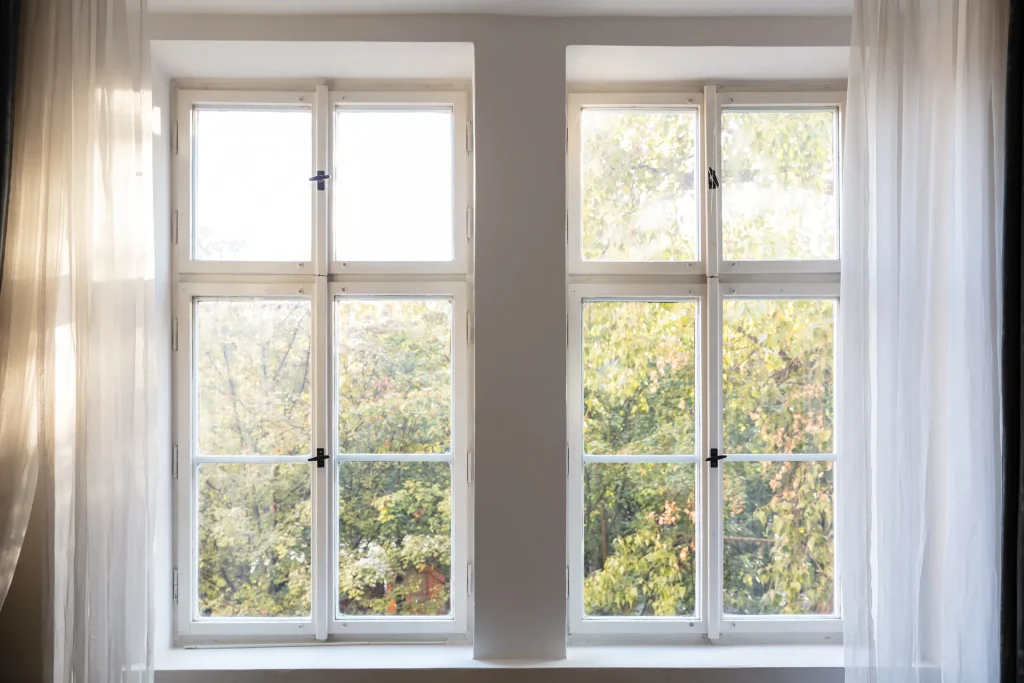
Not every window problem means replacement — plenty of issues are fixable with a repair (see our repair and maintenance page). But certain signs point toward replacement being the smarter long-term move.
1. Fogging between the panes
If you see condensation or a cloudy haze between double-pane glass (not on the surface, but trapped inside), the seal has failed. That’s not cleanable — it means the insulating gas has escaped, and the window is no longer performing efficiently.
2. Persistent drafts despite weatherstripping
If you’ve replaced seals and weatherstripping and still feel air movement near the window, the problem is likely the frame itself, not just the seal.
3. Difficulty opening or closing
Windows that stick, won’t stay open, or need force to operate often indicate frame warping or a failed balance system — sometimes repairable, sometimes a sign the frame has shifted enough that replacement makes more sense.
4. Visible frame damage — rot, warping, or cracking
Wood rot, warped vinyl, or cracked frames compromise both energy performance and structural integrity. This is one of the clearer replace-don’t-repair signals.
5. Noticeably higher energy bills
If your heating or cooling costs have crept up and you can feel temperature differences near your windows, single-pane or failed-seal windows are a common culprit.
6. Outside noise seems louder than it used to
Seal degradation affects sound insulation the same way it affects thermal insulation — if the street suddenly sounds louder indoors, it’s often the same underlying seal failure causing both issues.
7. Your windows are original to an older home
If your home is several decades old and still has its original windows, even well-maintained ones are likely well past the efficiency standards available today.
Not sure which category you’re in?
A quick assessment from our team will tell you honestly whether you’re looking at a repair or a replacement — we’re not incentivized to push one over the other.
