
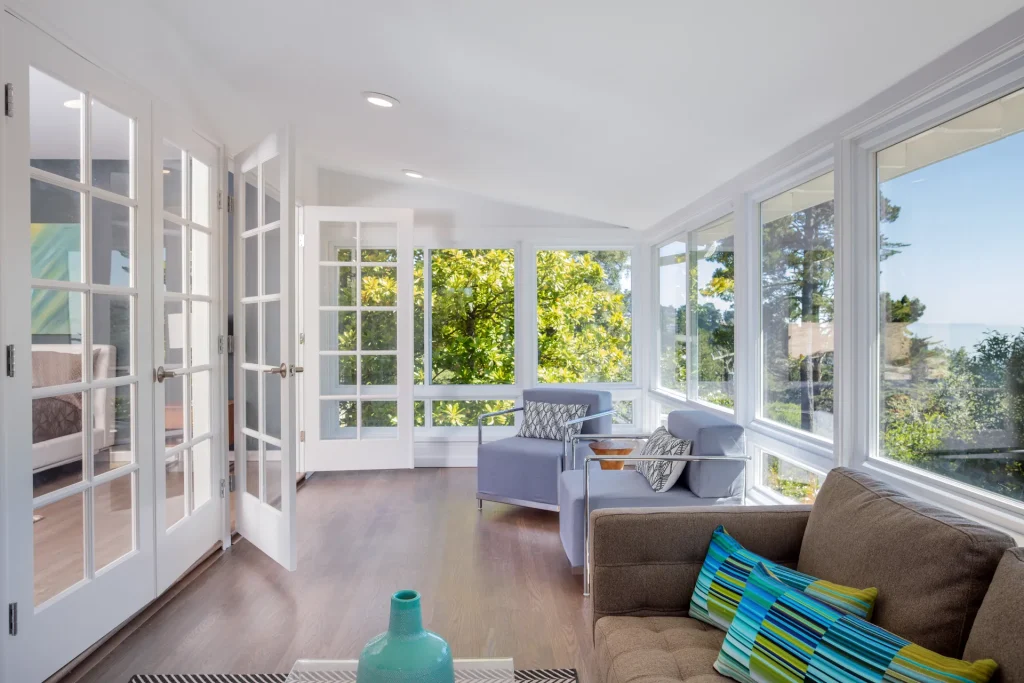
Plenty of Front Range homes were designed around the view to the west. The mountains are out there, so that is where the big windows went. The trade-off shows up every summer afternoon: a living room that turns into an oven around 4 p.m., glare across the TV, and a stripe on the hardwood floor or the sofa that is a shade lighter every year.
This guide explains why west-facing glass is the hardest exposure on a Colorado house, how to tell heat, glare and fading apart, and what actually helps, from glass choices to shades, awnings and trees. KV Windows is a veteran-owned Pella Platinum Certified Contractor based in Westminster, and we would rather you fix the right problem than buy more window than you need.
Why west-facing windows are the hardest exposure
Two things make west glass tough. First, timing: the sun hits west walls in the afternoon, right when the house has been warming all day and outdoor temperatures peak. Second, angle: by late afternoon the sun is low in the sky, so it shines almost straight into the window and deep into the room.
The U.S. Department of Energy’s Building America guidance, published through Pacific Northwest National Laboratory, points out that in midsummer the sun shines directly on east and west walls for far more hours than on north and south walls, and that the shading priority for most homes is skylights first, then east- and west-facing windows. It also notes that the roof overhangs that work so well on south windows do much less on the west, because the low afternoon sun slides right under them.
Add Colorado’s elevation and clear, dry air, and the sun on a west wall feels intense, especially on the large view windows and sliding doors common in newer foothills-facing neighborhoods.
Heat, glare and fading are three different problems
It helps to separate what is bothering you, because the fixes overlap but aren’t the same:
- Heat is solar energy coming through the glass and warming the room. It is measured by the Solar Heat Gain Coefficient (SHGC).
- Glare is too much visible light, usually low-angle sun shining straight at your eyes or a screen. Visible Transmittance (VT) describes how much visible light gets through.
- Fading of floors, rugs, furniture and art is caused largely by ultraviolet light, but visible light and heat contribute too. That is why no glass can stop fading completely. Better glass slows it down.
How to read the window label
Windows certified by the National Fenestration Rating Council carry a label with a few key numbers. For a west-facing room, the two that matter most are:
- SHGC, from 0 to 1. A lower number means less solar heat comes through. For hot afternoon exposures, a lower SHGC is usually the goal.
- Visible Transmittance, also from 0 to 1. A higher number means more daylight. The best glass for a west room keeps heat out without making the room feel dim.
You will also see U-factor, which describes how well the window insulates. Lower is better, and it matters in winter on every side of the house. Our energy-efficient windows guide explains U-factor and what really drives efficiency in Denver homes.
You don’t need the same glass on every side
Low-SHGC glass keeps out summer heat, but it also keeps out winter sun that helps warm the house. The DOE guidance suggests that in climates with real heating seasons, it can make sense to use higher-SHGC glass on south-facing windows to capture winter sun, while still controlling heat on east and west exposures.
Pella offers several Low-E glass options, with names such as NaturalSun, AdvancedComfort and SunDefense, and they balance heat, light and insulation differently. Rather than going by the name, compare the published NFRC numbers for the exact product and size. On many projects we specify glass opening by opening, so the west wall gets more heat control while other sides keep their winter sun. Different coatings can look slightly different from outside, so we’ll show you how they compare before you order.
Shading still does a lot of the work
Even the best glass works better with shade. Because the afternoon sun is low, the DOE guidance recommends vertical shading in front of east- and west-facing windows:
- Interior shades and blinds. Roller shades, cellular shades and blinds can be adjusted through the day. The Attachments Energy Rating Council rates many interior and exterior window attachments, which makes products easier to compare.
- Exterior solar screens and shades stop heat before it reaches the glass, while still allowing a view.
- Deep overhangs, pergolas and covered patios shade west glass for much of the afternoon. Shallow eaves don’t.
- Trees and shrubs on the west side are one of the most effective long-term fixes. Deciduous trees shade in summer and let some sun through in winter.
- Between-the-glass blinds. On some Pella products, such as the Pella Lifestyle Series, blinds or shades can be built in between the panes, where they stay clean and out of the way.
If you live in an HOA community, Colorado’s Common Interest Ownership Act says an association can’t effectively prohibit awnings, shutters and other shade structures marketed to reduce energy use, though it can apply reasonable aesthetic rules about their size, placement and appearance, and the rule doesn’t apply to common elements. Check your guidelines and our HOA approval guide before you order. This isn’t legal advice; your association or an attorney can tell you how it applies to your home.
A word about window film
Aftermarket window film can reduce heat and UV on existing windows. The DOE guidance lists film as a retrofit option for east and west glass, with a caution to make sure the film is compatible with the existing window. Film changes how hot the glass gets, so read your window warranty or check with the manufacturer before applying film to insulated glass.
Frames and doors on a hot west wall
Glass isn’t the only thing taking the sun. Dark exterior frame colors absorb more heat, and Colorado’s intense sun is hard on finishes. If you want black or bronze frames on a west elevation, ask which product lines and finishes are designed for it. Our window materials guide compares vinyl, wood, fiberglass and aluminum for Colorado sun, and the Pella Impervia page explains its fiberglass and powder-coat finish.
West-facing sliding and French doors are often the biggest pieces of glass in the house. The same glass and shading choices apply, and our patio doors page covers styles and options.
Replace, or shade what you have?
If your windows are fairly new Low-E units in good shape, start with shading: shades, an exterior screen or a tree. If they are single-pane, aluminum, clear double-pane or failing, replacing them lets you choose glass for each exposure and fix drafts and fogged panes at the same time. Our 7 signs it’s time to replace your windows can help you decide, and the materials page covers frame options.
We see this most in homes built to face the mountains, such as view lots in Erie, Superior, Louisville and Golden.
Get help with a hot west room
KV Windows is a veteran-owned Pella Platinum Certified Contractor based in Westminster, with 11 years, 1,000+ projects and a 4.7-star rating across 115 Google reviews. We are a Team Dave Logan member, our installers are certified, and the products we install carry the manufacturer’s warranty.
Book a free in-home estimate or call 720.535.9629. We’ll look at which way your windows face, ask how the room feels on a summer afternoon, and show you the glass options and published ratings that fit, along with an honest opinion on whether shading alone would do the job.
